
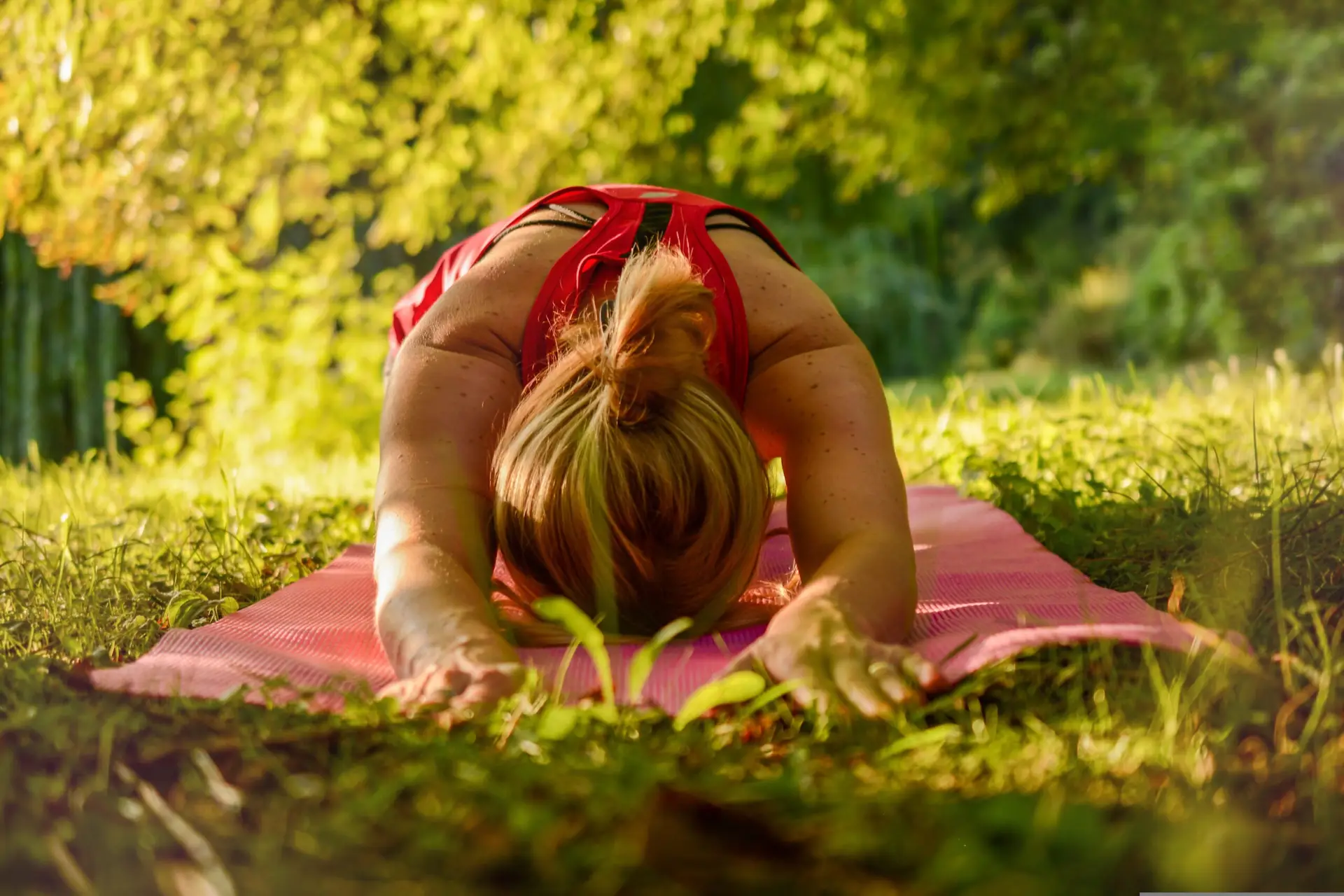
We tend to treat movement as optional, something reserved for a workout slot in an already full calendar, and breath as something we barely think about at all. Both assumptions cost us more than we realize.
Your body was built to move in small, constant ways throughout the day, not in one concentrated hour followed by long stretches of stillness. And breath, almost uniquely among your body’s functions, is something you can consciously use to change your physical state in real time. Together, these two pillars are among the most immediate tools you have for shifting how you feel and how you function.
This is why “Movement & Breath” is the fourth pillar we are going deeper into in our biohacking series.
Why your body needs movement, not just exercise
Muscle is not only what moves you from place to place. It behaves like an endocrine organ, releasing compounds called myokines when it contracts, which help regulate inflammation, metabolism, and even mood. Movement also does something your heart can’t do alone: it pumps lymphatic fluid, the system responsible for clearing waste and supporting immunity, because unlike blood, lymph has no central pump of its own. It moves when you move.
This is part of why prolonged sitting is now understood as its own health risk, independent of how much you exercise. A single hour at the gym doesn’t undo eight hours of stillness the same way; your body needs movement distributed throughout the day, not concentrated into one block of it.
Joints follow the same logic. Cartilage has no blood supply of its own; it depends on movement to draw in the fluid that nourishes it. Stay still for too long, and the very tissue meant to cushion your joints receives less of what it needs.
Where breath fits in
Breath works differently, but toward the same end. It’s one of the only functions in your body that runs automatically and yet responds instantly to conscious control.
Fast, shallow breathing signals danger to your nervous system, even when there is none, and keeps it in a state of alert. Slow, controlled breathing does the opposite: it stimulates the vagus nerve, the main pathway of your parasympathetic nervous system, and shifts your body toward rest, digestion, and repair. The effect is measurable within minutes, in improved heart rate variability and a drop in cortisol.
The season factor
As summer winds down, our region moves into one of its busiest transitions. School routines restart, workdays regain their pace, and stillness creeps in differently, not from heat and lethargy, but from long stretches at a desk, in traffic, or catching up on what slipped over the summer. Movement and breath aren’t about adding one more task to a fuller calendar. They’re about giving your body a way to reset within the pockets of time you already have.
Where to start: two small entry points
For movement: build in what some call a movement snack. Every 60 to 90 minutes, take two minutes to stand, stretch, or walk a short distance. It’s not a workout, and it isn’t meant to replace one. It exists to interrupt stillness before it accumulates into the kind that a single daily workout can’t offset.
For breath: you don’t need an intense workout to shift your physiology. Even five minutes of conscious breathing in the morning moves your nervous system from reactive to regulated. Try box breathing: inhale for 4 counts, hold for 4, exhale for 4, hold for 4. Repeat for four to six rounds. Simple, effective, and available to you wherever you are, at a desk, in a car, in a hallway between meetings.
A mindset shift to carry with you
We’re taught to measure movement by output: calories burned, steps counted, workouts completed. But used this way, movement and breath are inputs, not outputs. They are direct messages to your body: keep circulating, keep clearing, you are safe, you can stand down.
Once you start using them this way, you no longer need a workout or a quiet retreat to feel regulated. You start being able to create that state yourself, in the middle of an ordinary day, standing at your desk or breathing through four counts in traffic.
That is the real biohack: not doing more but distributing what your body already knows how to do.
This is Part 4 of the Soha Wellness Biohacking Series. Next, we go deeper into Stress & Nervous System, and what renowned physician and author Dr. Gabor Maté teaches us about the cost of chronic stress on the body.